Key points
- Venomous snakes can be dangerous to outdoor workers.
- Although most people do not die from snake bites, there can be lasting effects.
- Employers and workers can take actions to stay safe.
Overview
Venomous snakes found in the United States include:
- Rattlesnakes
- Copperheads
- Cottonmouths/water moccasins
- Coral snakes
Each year, 7,000–8,000 people are bitten by venomous snakes in the United States. About 5 of those people die. More people would die if they did not seek medical care.
Workers are more likely to suffer long-term injuries than to die from snake bites. For those bitten by rattlesnakes, 10–44 percent will have lasting injuries. For example, they may lose all or part of a finger or lose the ability to use it.
Types
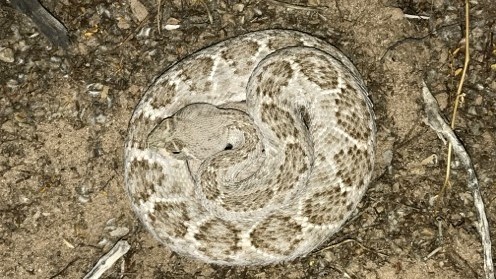
Rattlesnakes
- The largest venomous snakes in the United States. Many species live in the United States.
- Can quickly and accurately strike one-third or more of their body length from any position (coiled or stretched out).
- May use their rattles as a warning if they are feeling threatened.
- Do not always rattle before biting.
- Can be found sunning near logs, boulders, or open areas.
- Found across the United States in mountains, prairies, deserts, and beaches.
- Antivenom is recommended for the treatment of signs of progressive envenomation (e.g., worsening of local tissue injury, systemic symptoms).
Copperheads
- Vary in color from reddish to golden tan.
- Colored bands on their bodies are typically hourglass-shaped.
- Have a deep facial pit between each eye and their nostril.
- Adults are about 1.5 – 3 feet long.
- Not usually aggressive, but will freeze if frightened, and strike if they feel threatened.
- Found in Eastern states and as far west as Texas in forests, rocky areas, swamps, and near water.
- If bitten, receiving antivenom as soon as possible helps limbs to recover faster and it lessens the chance that a limb will be disabled after copperhead snake envenomation.
Cottonmouths/Water Moccasins
- Adults are typically over 4 feet long.
- Adults are dark tan, brown, or nearly black, with vague black or dark brown cross-bands.
- Juveniles have a bold cross-banded pattern of brown or orange with a yellow tail.
- Found in the Southeastern United States in or around water.
Coral Snakes
- Sometimes confused with nonvenomous king snakes, which have similar colored bands.
- May hide in leaf piles or burrow into the ground.
- Found in the Southern United States in wooded, sandy, or marshy areas.
Symptoms
Signs or symptoms of a snake bite can vary depending on the type of snake.
Around the wound, you may experience:
- Puncture marks
- Bleeding, redness, swelling, bruising, or blistering
- Severe pain and tenderness
After a snake bite, you may experience:
- Nausea, vomiting, or diarrhea
- Trouble seeing or breathing
- In extreme cases, breathing may stop
- Rapid heart rate, weak pulse, low blood pressure
- Metallic, mint, or rubber taste in the mouth
- Increased salivation and sweating
- Numbness or tingling around face and/or limbs
- Muscle twitching
Prevention
What employers can do
Employers can protect their workers from venomous snake bites by training them about:
- Their risk of being bitten by venomous snakes.
- How to identify venomous snakes.
- How to prevent snake bites.
- What they should do if they see a snake or if a snake bites them.
What workers can do
- Do not touch or handle any snake.
- Stay away from tall grass and piles of leaves when possible.
- Avoid climbing on rocks or piles of wood where a snake may be hiding.
- Be aware that snakes tend to be most active at dawn and dusk and in warm weather.
- Wear boots and long pants when working outdoors.
- Wear leather gloves when handling brush and debris.
First Aid
If a snake bites you:
- Seek emergency medical attention as soon as possible to start antivenom (if needed) and stop irreversible damage.
- Do not drive yourself to the hospital because the snakebite can make you dizzy or pass out.
- Take a photograph from a safe distance to identify the snake if possible, which may aid in faster treatment.
- Keep calm.
- Inform your supervisor.
- Apply first aid while waiting for someone to take you to the hospital.
- Lay or sit down with the bite in a neutral position of comfort.
- Remove rings and watches before swelling starts.
- Wash the bite with soap and water.
- Cover the bite with a clean, dry dressing.
- Mark the leading edge of tenderness/swelling on the skin and write the time alongside it.
Do not do any of the following:
- Do not pick up the snake or try to trap it.
- NEVER handle a venomous snake, not even a dead one or its decapitated head.
- Do not wait for symptoms to appear; get medical help right away.
- Do not apply a tourniquet, electric shock, or folk therapies.
- Do not slash the wound with a knife or cut it in any way.
- Do not try to suck out the venom.
- Do not apply ice or immerse the wound in water.
- Do not drink alcohol as a painkiller or take pain relievers (such as, aspirin, ibuprofen, naproxen).
Source: https://www.cdc.gov/niosh/outdoor-workers/about/venomous-snakes.html