

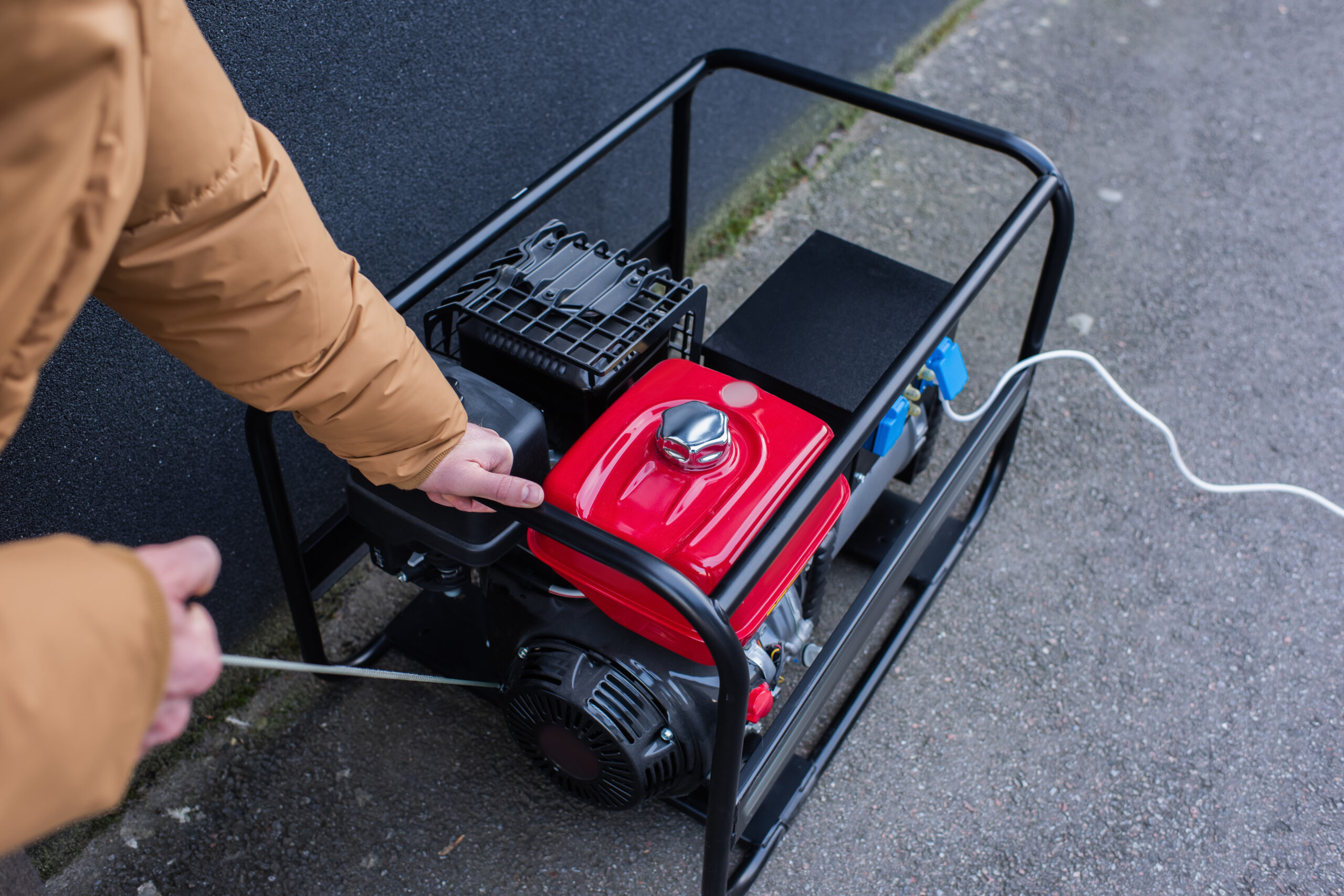
Portable generators are incredibly useful when temporary or remote electric power is needed — but they are also deadly. Over 1,300 people died from carbon monoxide poisoning caused by portable generators between 2004 and 2021 alone, and another 77,000 were injured in that same period. The U.S. Consumer Product Safety Commission (CPSC) warns that the primary hazards associated with portable generator use are carbon monoxide (CO) poisoning from toxic engine exhaust, electric shock or electrocution, fire, and burns.
Carbon Monoxide Hazards
Carbon monoxide is a poison you cannot see or smell. When a generator is used in a confined space, it can produce deadly levels of CO within minutes — even if doors and windows are open. CO from generators can rapidly incapacitate and kill. Exposed persons may become unconscious before experiencing milder symptoms such as nausea, dizziness, or weakness.
Danger labels are required on all portable generators manufactured or imported on or after May 14, 2007. The label states: Using a generator indoors CAN KILL YOU IN MINUTES. Generator exhaust contains carbon monoxide. This is a poison you cannot see or smell. NEVER use inside a home or garage, EVEN IF doors and windows are open. Only use OUTSIDE and far away from windows, doors, and vents.
Follow these safety tips to protect against CO poisoning:
- Never use a generator inside homes, garages, crawlspaces, sheds, or similar areas — even when using fans or opening doors and windows for ventilation. Deadly levels of CO can quickly build up and linger for hours, even after the generator has shut off.
- Locate the unit outdoors and far from doors, windows, and vents that could allow CO to enter indoors. Point the exhaust away from any nearby buildings.
- Install battery-operated CO alarms or plug-in CO alarms with battery backup in your home according to the manufacturer’s instructions. CO alarms should be certified to the requirements of the latest safety standards (UL 2034, IAS 6-96, or CSA 6.19.01). Test batteries monthly.
- If you start to feel sick, dizzy, or weak while using a generator, get to fresh air immediately. Do not delay.
Electrical Hazards
- Generators pose a risk of shock and electrocution, especially when operated in wet conditions. If you must use a generator when it is wet outside, operate it under an open, canopy-like structure on a dry surface where water cannot reach it or puddle beneath it. Dry your hands before touching the generator.
- Connect appliances to the generator using heavy-duty extension cords specifically designed for outdoor use. Make sure the wattage rating for each cord exceeds the total wattage of all appliances connected to it. Check that the entire length of each cord is free of cuts or tears and that the plug has all three prongs.
- Never try to power the house wiring by plugging the generator into a wall outlet — a practice known as “backfeeding.” This is extremely dangerous and presents an electrocution risk to utility workers and neighbors served by the same utility transformer. It also bypasses some of the built-in household circuit protection devices.
Fire Hazards
- Never store fuel for your generator in the home. Gasoline, propane, kerosene, and other flammable liquids should be stored outside of living areas in properly-labeled, non-glass safety containers. Do not store them near a fuel-burning appliance, such as a natural gas water heater in a garage.
- Before refueling the generator, turn it off and let it cool down. Gasoline spilled on hot engine parts could ignite.
Source: https://www.cpsc.gov/Safety-Education/Safety-Guides/Home-Indoors/Generators-and-Engine-Driven-Tools