

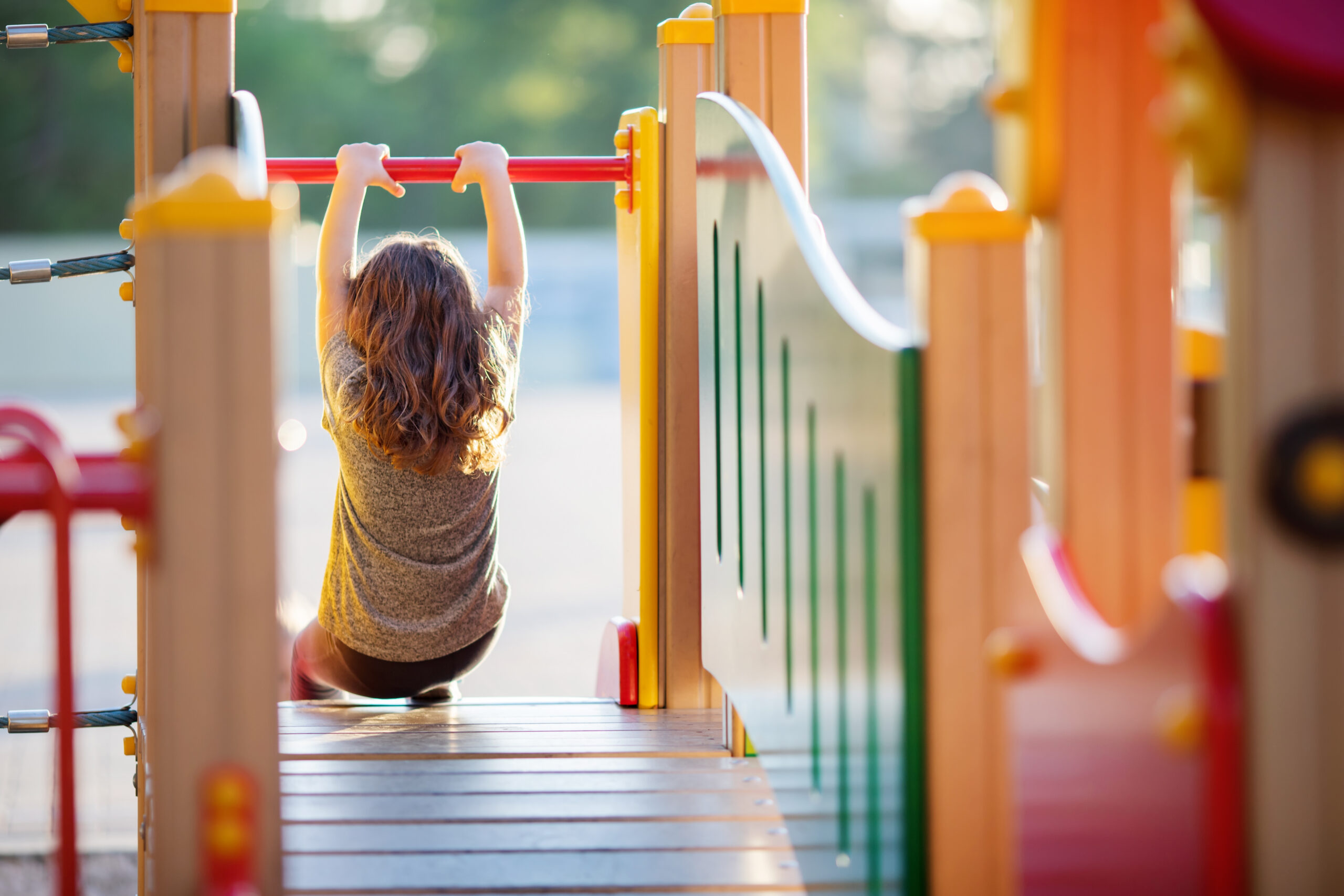
Summer means playgrounds — but the U.S. Consumer Product Safety Commission (CPSC) warns that playground equipment sends more than 190,000 children to hospital emergency rooms every year. Falls from equipment account for the vast majority of injuries, but deaths and serious injuries have also been reported from entanglement of ropes and clothing, head entrapment in openings, and impact from equipment tip-overs and structural failures. Whether your children play at a public park or on backyard equipment, knowing what to look for could prevent a serious injury.
What to Check at Any Playground
- Make sure surfaces around playground equipment have at least 12 inches of wood chips, mulch, sand, or pea gravel, or are mats made of safety-tested rubber or rubber-like materials. Thin mats and carpeting are not adequate as protective surfacing.
- Check that protective surfacing extends at least 6 feet in all directions from play equipment. For swings, surfacing must extend in front and back at a distance twice the height of the suspending bar.
- Make sure play structures more than 30 inches high are spaced at least 9 feet apart.
- Check for dangerous hardware such as open “S” hooks or protruding bolt ends that can cause cuts and injuries.
- Make sure spaces that could trap children, such as openings in guardrails or between ladder rungs, measure less than 3.5 inches or more than 9 inches. Openings in between these sizes can trap a child’s head.
- Never attach ropes, jump ropes, clotheslines, pet leashes, or cords of any kind to play equipment due to strangulation hazards.
- Repair sharp points or edges on equipment immediately. Replace missing hardware and close open “S” hooks.
For Backyard Home Playgrounds
- Install play equipment on level ground with adequate surfacing and anchoring. Create a site free of obstacles such as low overhanging tree branches, overhead wires, tree stumps, roots, large rocks, bricks, and concrete.
- Check protective caps and plugs covering bolt ends and ends of tubing are in place and tight. Inspect twice a month and replace as needed.
- Check the condition of equipment regularly, looking for broken or missing components, bent pipes or tubing, and splintering wooden surfaces. Repair as necessary.
- Check swing seats, ropes, chains, and cables monthly for deterioration and replace as needed.
- Save the manufacturer’s instructions so you can order replacement parts that break or wear out.
- Store outdoor toys and equipment after play. Rain and dew can rust or damage equipment, creating additional hazards.
Supervision Is Essential
Because all playgrounds present challenges and because children can be expected to use equipment in unintended ways, adult supervision is always recommended. A playground should allow children to develop gradually and test their skills by providing graduated challenges appropriate for their age and abilities. Always supervise children on play equipment to make sure they are safe.
To report a playground equipment injury or unsafe product, visit SaferProducts.gov or call CPSC’s Hotline at 800-638-2772 (TTY 800-638-8270).
Source: https://www.cpsc.gov/safety-education/safety-guides/playgrounds/public-playground-safety-checklist