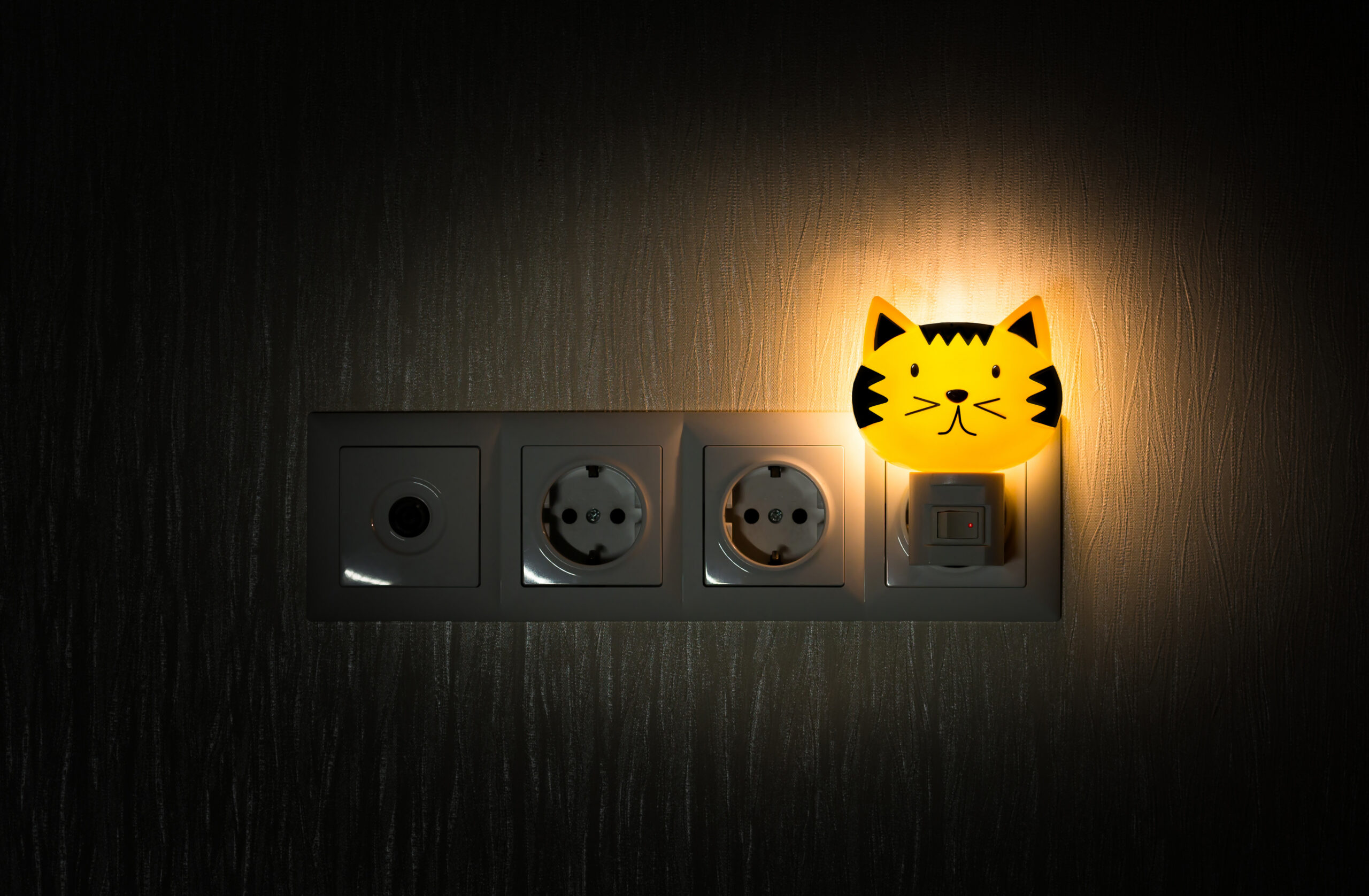
Nightlights are in millions of children’s bedrooms across America — and they have caused fires, electrical shocks, electrocutions, and explosions. The U.S. Consumer Product Safety Commission (CPSC) has issued multiple recalls against nightlights over the years for hazards ranging from overheating batteries and flammable plastic to exposed wiring and loose electrical connections that pose shock and electrocution dangers. These products plug directly into wall outlets at floor level — within easy reach of the youngest, most vulnerable children.
How Nightlights Become Dangerous
Non-compliant nightlights can become hazardous in several ways:
- Loose electrical connections — nightlights with improperly connected or undersized internal wiring can overheat, short circuit, or start fires
- Flammable plastic housings — some recalled nightlights were made from plastic that ignites rather than self-extinguishing, turning a small spark into a larger fire
- Detachable faceplates — faceplates that can be broken off or pulled away by a child expose live wiring, creating an immediate electrocution hazard
- Overheating batteries — battery-powered nightlights with non-compliant lithium batteries can overheat and melt or catch fire during charging or use
- Leaking liquid — some liquid-filled decorative nightlights can leak onto the electrical outlet, creating a fire hazard
Notable Recalled Nightlights
- Trisonic nightlights (sold at dollar stores, 2001–2003) — posed serious electrocution, electric shock, burn, and fire hazards; one nightlight exploded and caused laceration injuries
- Dura Kleen nightlights (sold at discount stores, 1999–2000) — loose electrical connections, made from flammable plastic, non-functional power switch; 459,000 units recalled
- Elmo Nitelights by The First Years (sold 1997–2000) — faceplates could be broken off, exposing live wiring; two 1-year-old girls and one adult received electrical shocks; 123,000 units recalled
- AM Conservation Group night lights (2016–2017) — posed smoking and smoldering hazard; 14 incidents reported
- Target Circo night lights — battery could overheat and cause the night light to melt, posing a fire hazard
What You Should Do
- Check SaferProducts.gov to verify whether any nightlight in your home has been recalled.
- Inspect nightlights regularly for cracks, discoloration, melting, warm-to-the-touch housing, or any sign of heat or damage.
- Never plug a nightlight into an outlet near water, curtains, or other flammable materials.
- Look for nightlights that carry a recognized testing laboratory certification such as UL, and avoid purchasing from discount retailers or unknown online sellers.
- Replace any nightlight that shows signs of damage or overheating immediately.
- Keep battery-operated nightlights away from young children who could access and ingest the batteries.
To report a dangerous nightlight or a product-related injury, visit SaferProducts.gov or call CPSC’s Hotline at 800-638-2772.
Source: https://www.cpsc.gov/Recalls/2003/CPSC-Trisonic-Announce-Recall-of-Nightlights