

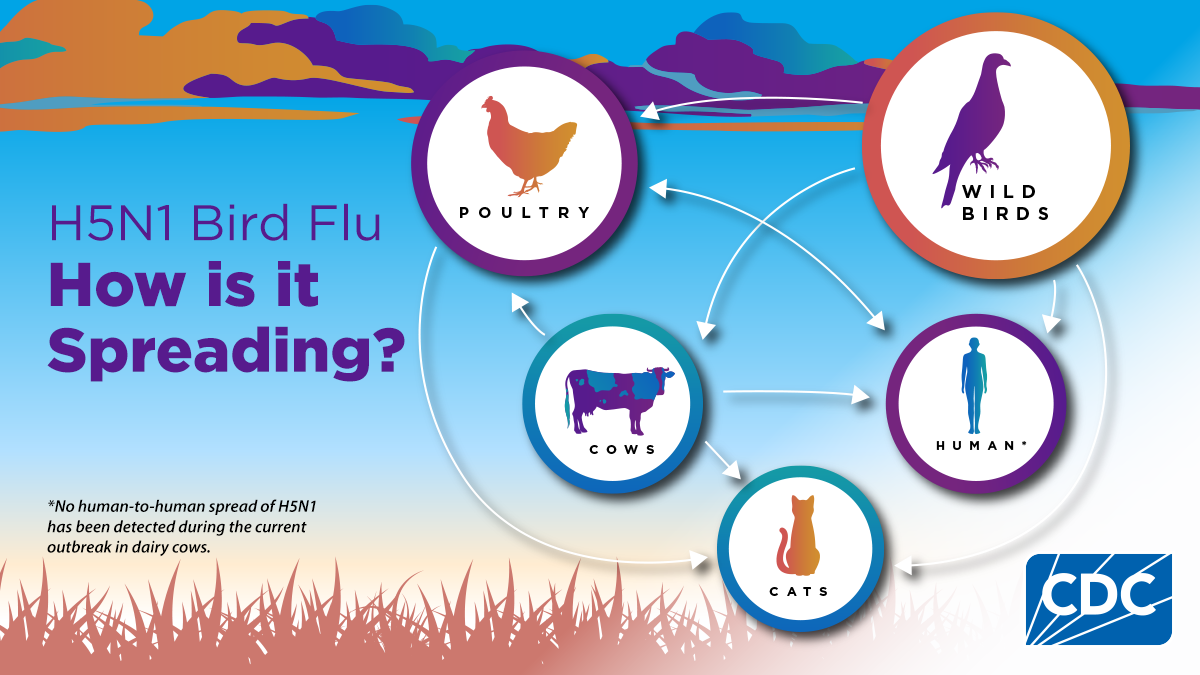
What to know
- H5 bird flu is widespread in wild birds worldwide and is causing outbreaks in poultry and U.S. dairy cows with sporadic human cases in U.S. dairy and poultry workers.
- While the current public health risk is low, CDC is watching the situation carefully and working with states to monitor people with animal exposures.
- CDC is using its flu surveillance systems to monitor for H5 bird flu activity in people.
Current situation
H5 Bird Flu Human Cases in U.S.
CDC streamlined H5 bird flu updates with routine influenza data updates and updated reporting cadences to reflect the current public health situation. As such, the following changes were made to this page: Data on the number of people monitored and tested for bird flu are reported monthly. USDA data on HPAI detections in animals will no longer be reported on the CDC website.
These data can be found on USDA’s website. CDC will continue to report any additional human cases of H5 bird flu and in FluView.
National situation summary since 2024
| Category | Status | Details |
|---|---|---|
| Person-to-person spread | None | There is no known person-to-person spread at this time. |
| Current public health risk | Low | The current public health risk is low. |
| Cases in the U.S. | 71 cases | Confirmed national total since 2024. |
| Deaths in the U.S. | 2 deaths | Reported fatalities linked to confirmed cases. |
When a case tests positive for H5 at a public health laboratory but testing at CDC is not able to confirm H5 infection, per Council of State and Territorial Epidemiologists (CSTE) guidance, a case is reported as probable. In January 2025, CDC updated requirements. After a public health laboratory’s first three cases of influenza A(H5) virus have been confirmed by CDC, subsequent detections by that laboratory can be considered confirmatory.
Source: https://www.cdc.gov/bird-flu/situation-summary/index.html