

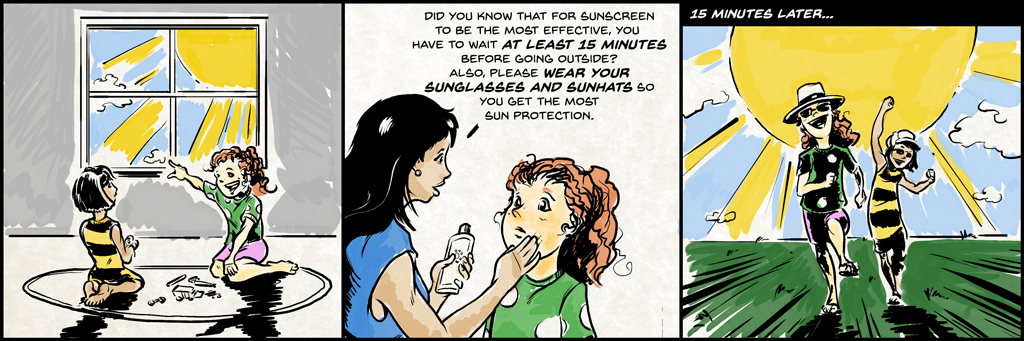
Sun Safety Tips
How you use sunscreens, and what other protective measures you take, make a difference in how well you are able to protect yourself and your family from sunburn, skin cancer, early skin aging and other risks of overexposure to the sun. Some key sun safety tips include:
- Limit time in the sun, especially between the hours of 10 a.m. and 2 p.m., when the sun’s rays are most intense.
- Wear clothing to cover skin exposed to the sun, such as long-sleeved shirts, pants, sunglasses, and broad-brimmed hats.
- Use broad spectrum sunscreens with SPF values of 15 or higher regularly and as directed.
- Reapply sunscreen at least every two hours, and more often if you’re sweating or swimming.
How do I apply sunscreen?
General directions:
- Apply 15 minutes before sun exposure. This allows the sunscreen to have enough time to provide the maximum benefit.
- Use enough to cover your entire face and body (avoiding the eyes and mouth). An average-sized adult or child needs at least one ounce of sunscreen (about the amount it takes to fill a shot glass) to evenly cover the body from head to toe.
- Know your skin. Fair-skinned people are likely to absorb more solar energy than dark-skinned people under the same conditions and may be more likely to burn.
- Reapply at least every two hours, and more often if you’re swimming or sweating.
Frequently forgotten spots:
- Ears
- Nose
- Lips (use SPF lip balm)
- Back of neck
- Hands
- Tops of feet
- Along the hairline
- Exposed scalp (from balding or thinning hair)
How do I store sunscreen?
To keep your sunscreen in good condition and maintain its effectiveness, FDA recommends you not expose sunscreen containers to direct sun. Protect the sunscreen by wrapping the containers in towels or keeping them in the shade while outside in the heat for long periods of time. This is why sunscreen labels must say: “Protect the product in this container from excessive heat and direct sun.”
Is sunscreen waterproof?
No. There’s no such thing as “waterproof” sunscreen.
People should also be aware that no sunscreens are “waterproof.” All sunscreens eventually wash off. Sunscreens labeled “water resistant” must be tested and found to be water resistant according to the required test procedures. Products labeled as water resistant are also required to state on their labels whether the sunscreen remains effective for 40 minutes or 80 minutes when swimming or sweating. All sunscreens, whether labeled as water resistant or not, must provide directions on when to reapply to ensure protection under usual conditions of use.
Do infants and children need sunscreen?
Sunscreen is not recommended for infants under six months old. FDA recommends that infants be kept out of the sun during the hours of 10 a.m. and 2 p.m., and to use protective clothing if they have to be in the sun. Infants are at greater risk than adults of sunscreen side effects, such as a rash. The best protection for infants is to keep them out of the sun entirely. Ask a doctor before applying sunscreen to children under six months of age.
For children over the age of six months, FDA recommends using sunscreen as directed on the Drug Facts label.
What are the types of sunscreen?
Sunscreen comes in many forms, including:
- Lotions
- Creams
- Sticks
- Gels
- Oils
- Butters
- Pastes
- Sprays
The directions for using sunscreen products can vary according to their forms. For example, spray sunscreens should never be applied directly to your face. This is just one reason why you should always read the label before using a sunscreen product.