
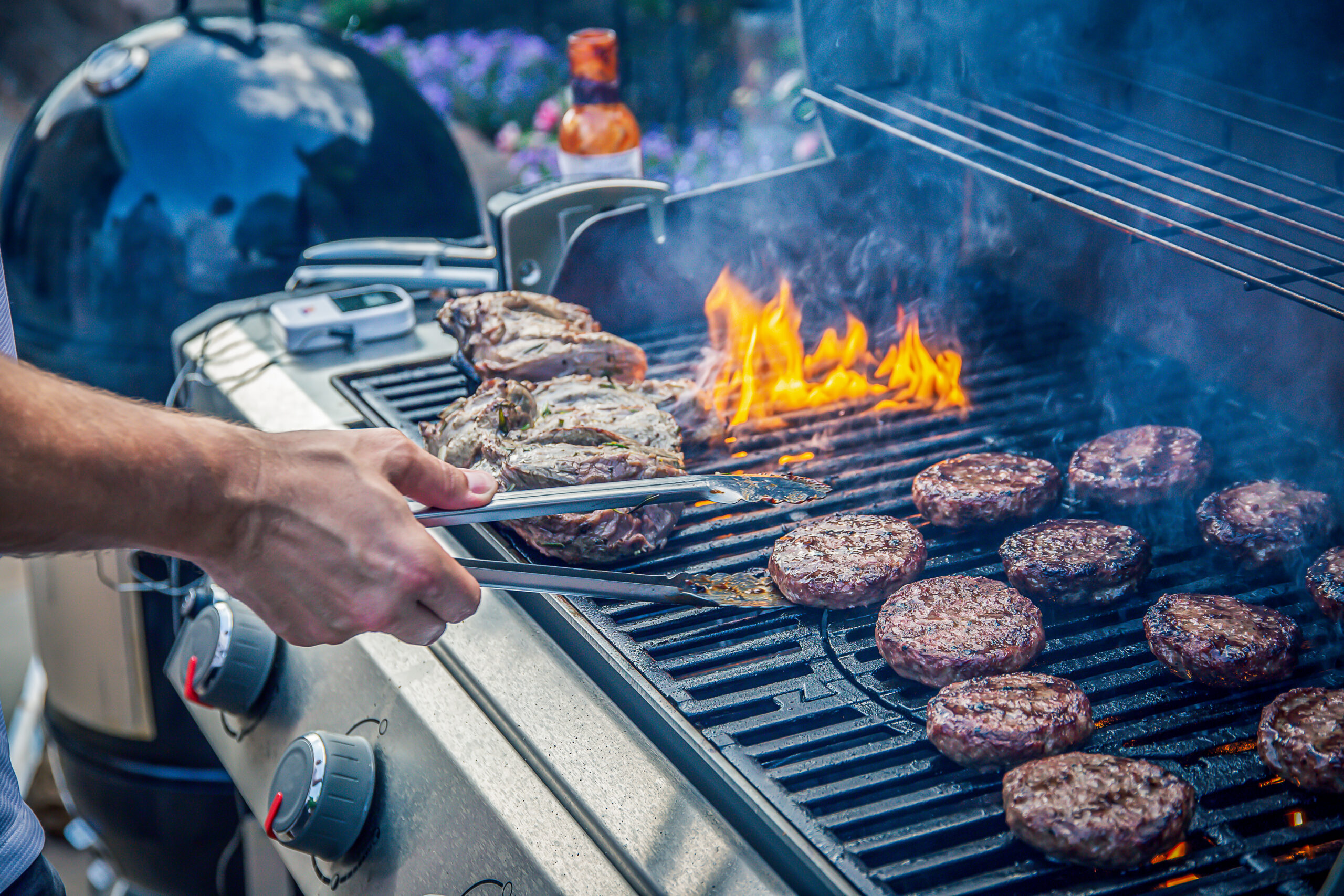
Every summer, thousands of Americans fire up their liquid propane (LP) or natural gas grills at the start of barbecue season — but before you light up, there are critical safety precautions the U.S. Consumer Product Safety Commission (CPSC) wants every grill owner to know. Many accidents occur after a grill has been unused over a period of time, or after a grill’s LP gas container has been refilled and reattached. LP gas, liquid propane, and natural gas are all flammable — and the consequences of ignoring safety checks can be deadly.
Tips for Safe Grill Use
- Make sure there are no lit cigarettes, matches, or open flames near a leaking grill.
- Never use a grill indoors due to carbon monoxide and fire hazards. Use the grill at least 10 feet away from your house or any building. Do not use the grill in a garage, breezeway, carport, porch, or under a surface that can burn.
- Always follow the instructions that accompany the grill.
- Never leave a grill unattended.
- Keep children away from the grill. The outside surface can get extremely hot and cause burns on contact.
- Keep a kitchen fire extinguisher nearby.
- If the grill’s flame goes out, turn off the gas supply at the propane tank immediately. Propane gas can build up underneath the grill racks and pose a dangerous explosion hazard. Open the grill lid and wait at least 5 to 10 minutes for the gas to dissipate before attempting to restart the grill.
LP Gas Container Tips
When Storing:
- Always keep containers upright.
- Never store a spare LP gas container under or near the grill.
- Never store or use flammable liquids, like gasoline, near the grill.
- Never use or store an LP gas container indoors.
When Transporting:
- Transport the container in a secure, upright position.
- Never keep a filled container in a hot car or car trunk.
When Refilling:
- Have the container refilled only by your LP gas dealer or by a qualified service station operator. Do not fill the container yourself. Consider using a cylinder exchange program.
When Connecting:
- Remove the container valve plug from the container valve.
- Thread the container connector securely into the container valve outlet, turning counterclockwise.
- Tighten the connection, but do not use excessive force.
- After connecting, always check for leaks.
When Disconnecting:
- Before disconnecting, turn off the grill’s burner and the container valve.
- Disconnect the container by turning clockwise.
- Place the container valve plug securely back into the container valve outlet.
Safety Checks for the Grill
- At least once every year, check the Venturi tube for blockage by insects, spiders, or food drippings. Clear any blockage with a pipe cleaner or wire.
- Check the grill’s hoses for cracking, brittleness, holes, and leaks. Make sure there are no sharp bends in the hose or tubing.
- Make sure hoses are kept as far away from hot surfaces as possible and away from areas where grease could drip on them. If hoses cannot be moved, have a heat shield installed.
- Check for LP gas leaks whenever you reconnect the grill to the LP gas container or if you smell gas. To check for leaks, open the LP gas supply valve fully and apply a soapy solution (one part water, one part liquid detergent) with a brush at connection points. If bubbles appear, there is a leak — turn off the LP gas and tighten the connection. If the leak does not stop, close the container valve and take the grill to your LP gas dealer or a qualified appliance repair person.
- If a leak is detected, do not attempt to light the grill until the leak has been repaired.
Tips for Purchasing a Grill or LP Gas Container
- Buy grills and containers that bear the mark of a nationally recognized testing laboratory.