

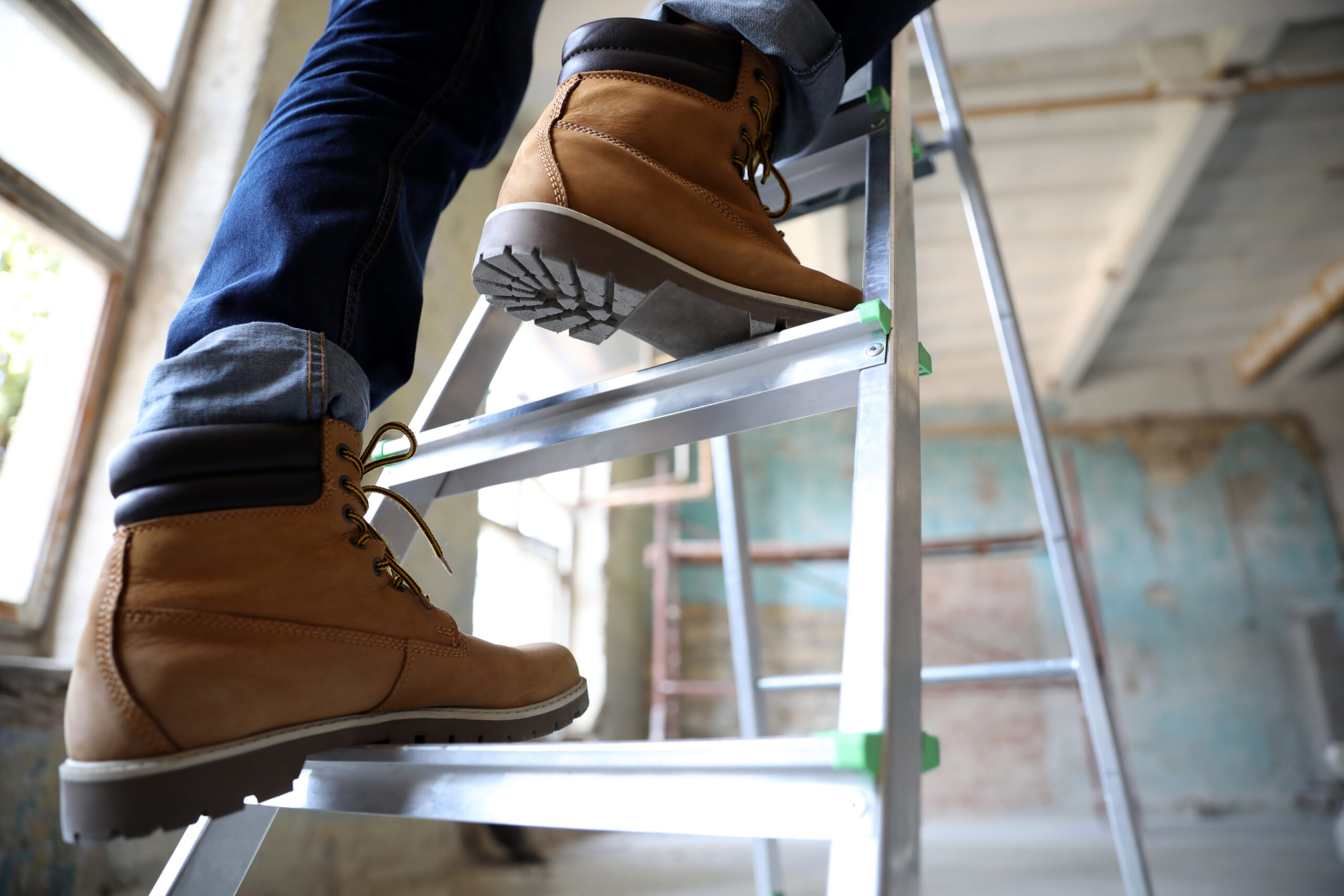
Ladders are one of the most commonly used and most commonly misused tools in American homes — and the consequences of getting it wrong can be fatal. The U.S. Consumer Product Safety Commission (CPSC) estimates that there are approximately 164,000 emergency room-treated injuries associated with ladders each year. Falls from ladders are one of the leading causes of traumatic injury and death among adults, particularly those 65 and older — who are 80 percent more likely than younger adults to be treated in emergency rooms for ladder-related injuries.
The Most Common Mistakes
Most ladder injuries follow predictable, preventable patterns. CPSC identifies the most common causes of ladder falls as:
- Using the wrong ladder for the job — selecting a ladder that is too short and standing on the top rung, or using a household step stool for a task requiring a full ladder
- Improper setup — placing the ladder on unstable or uneven ground, leaning it at the wrong angle, or setting it too far from or too close to the work surface
- No spotter — climbing without someone holding the base of the ladder, particularly for taller ladders or tasks near roof edges and overhangs
- Overreaching — leaning too far to the side, shifting the center of gravity beyond the ladder’s rails and causing a tip
- Carrying tools while climbing — both hands should be on the ladder when ascending and descending; tools should be hoisted separately
- Climbing near power lines — electrical contact from a ladder is fatal
Ladder Safety Tips
- Always read the warning labels on your ladder before use.
- Inspect the ladder before each use for cracks, missing rungs, loose hardware, or damaged feet.
- Set the ladder on firm, level ground. Never place a ladder on boxes, barrels, or other unstable surfaces.
- For straight and extension ladders, position the base 1 foot away from the wall for every 4 feet of ladder height. The ladder should extend at least 3 feet above the roof or platform edge.
- Always maintain three points of contact — two hands and one foot, or two feet and one hand — while climbing.
- Never stand on the top two rungs of a stepladder or the top three rungs of an extension ladder.
- Face the ladder while climbing — never climb facing away.
- Never carry heavy loads or tools while climbing. Use a tool belt or hoist materials separately.
- Only one person on a ladder at a time.
- Keep ladders away from doors that can open into the ladder. Lock or block the door.
- Never use a metal ladder near electrical power lines or electrical equipment.
- If you are 65 or older, use extra caution and always have a spotter.
Check for Recalled Ladders
CPSC regularly recalls ladders for defects that can cause unexpected failures. Recalled ladders include Werner 20-foot and 24-foot Multi-Max Pro multi-purpose ladders with locking mechanisms that can jam and fail to fully lock, and multiple models from Louisville Ladder and Frontgate. Check SaferProducts.gov to verify that your ladder has not been recalled.
To report a dangerous ladder or a product-related injury, visit SaferProducts.gov or call CPSC’s Hotline at 800-638-2772.
Source: https://www.cpsc.gov/s3fs-public/Home_Safe_Outdoor-Repairs_checklist_COVID19_FINAL_0.pdf