
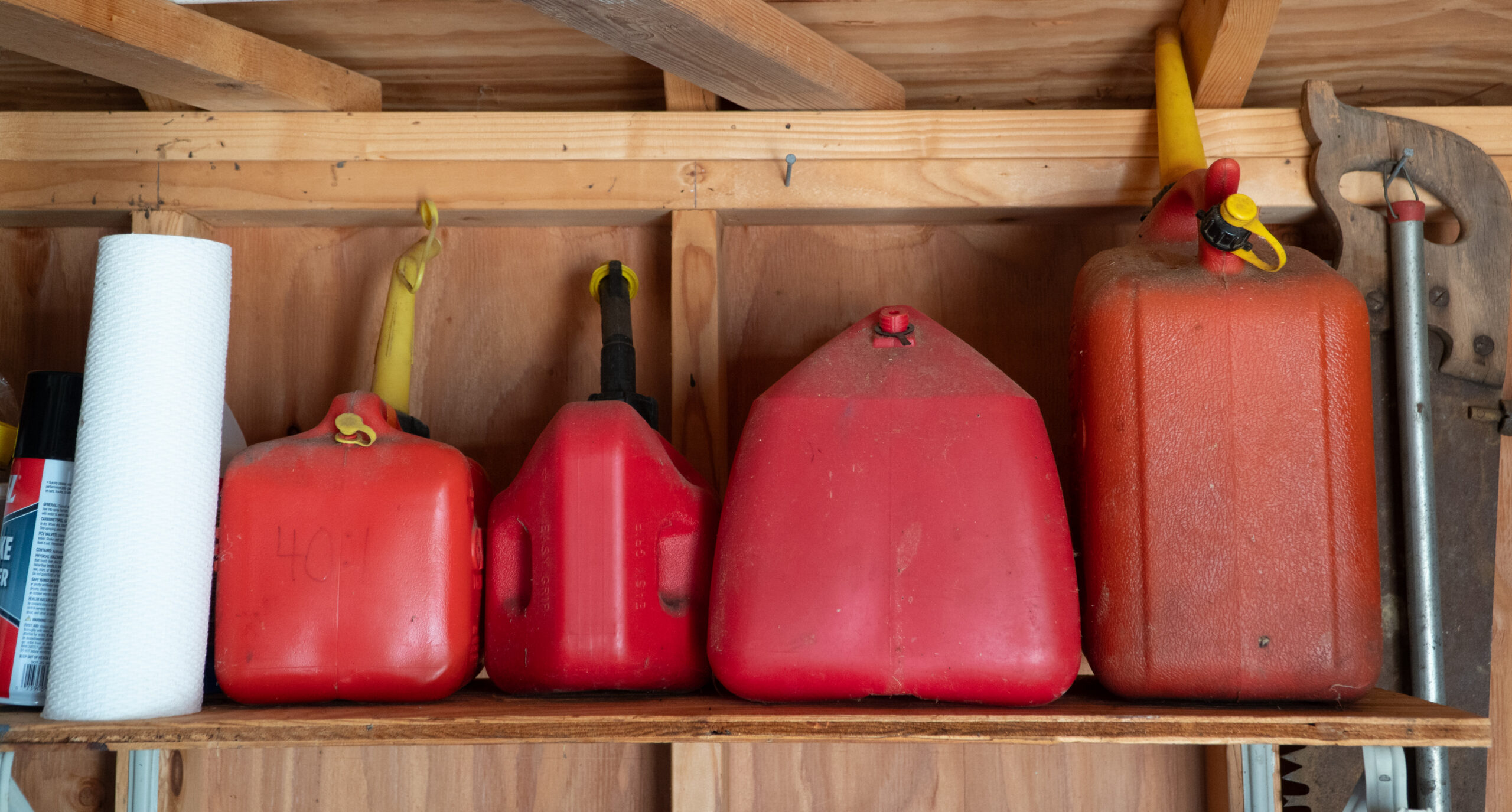
That gas can sitting in your garage might be more dangerous than you realize. The U.S. Consumer Product Safety Commission (CPSC) warns that portable fuel containers — including gas cans and other containers holding flammable liquids — can cause violent flash fires and severe, potentially fatal burn injuries when used or stored improperly. Each year, thousands of people are treated at emergency departments for burn injuries related to flammable liquids. Many of these incidents happen outdoors during summer activities involving backyard fire pits, campfires, bonfires, ATVs, lawn mowers, and generators.
What Is Flame Jetting and Why Is It So Dangerous?
When liquid fuel — such as gasoline, kerosene, charcoal lighter fluid, ethanol, bioethanol, or fuels for small engines — is poured from a container over an exposed flame or other ignition source, it can cause a violent flash fire known as flame jetting. Even the invisible vapors from liquid fuels can ignite and flash back into the container, causing a severe explosion and potentially fatal burn injuries. This can happen even if you believe the fire was not ignited or has gone out.
Under the Portable Fuel Container Safety Act, portable fuel containers manufactured after July 12, 2023, must have flame mitigation devices that impede the propagation of a flame into the container. When purchasing a gas can or portable fuel container, look for one that has a flame mitigation device and is child resistant. CPSC has recently warned consumers to immediately stop using several non-compliant products sold on Walmart.com and other online retailers, including fuel bottles sold by Shenzhen Pink Vine Technology (sold as an unnamed brand), Shenzhen Yinglong Industrial (sold as True Brothers), and Zhengzhou Weipai Jiajuyou Xian Gongsi (sold as Xastro), all of which lack required flame mitigation devices and child-resistant closures.
Safe Use and Storage Tips
- Never use gasoline to start a fire or to re-start a fire, even if you think the fire was not ignited.
- Never add liquid fuel after trying to start a fire, even if you don’t see a visible flame.
- Store portable fuel containers in well-ventilated, cool areas only. Never store gas cans inside a house, basement, or near sources of ignition such as fuel-burning appliances, open flames, pilot lights, stoves, heaters, or electric mowers.
- Never smoke near gasoline or at a gas station.
- Always place a gas can on the ground to fill up at the gas station. Do not use plastic bags or other inappropriate containers with gasoline or other flammable liquids.
- Do not wipe flammable liquids from your hands onto clothing. Spot clean and line dry clothes if flammable liquids are spilled.
- Keep a hose or fire extinguisher nearby when using fire pits or campfires.
- Never burn when wildfire risk is high.
- Buy a gas can or portable fuel container that is child resistant to protect young children from accidental access to flammable liquids.
To report an unsafe fuel container or a product-related injury, visit SaferProducts.gov or call CPSC’s Hotline at 800-638-2772 (TTY 800-638-8270).