Skateboards and non-motorized scooters send tens of thousands of Americans to the emergency room every year — and the majority of serious injuries and deaths are entirely preventable. The U.S. Consumer Product Safety Commission (CPSC) warns that fewer than half of all riders wear helmets, and almost none wear additional protective gear. The consequences are catastrophic: head injuries, skull fractures, and traumatic brain injuries that can cause permanent disability or death.
The Helmet Crisis
A CPSC special study of powered scooter-related injuries found that fewer than half of all victims were wearing helmets at the time of injury, and almost none were wearing knee pads, elbow pads, or wrist guards. Among riders of non-motorized scooters and skateboards, the pattern is similar. CPSC data from a CDC report covering 2009–2018 shows there were nearly 597,000 bicycle and board sport-related traumatic brain injuries treated in U.S. hospital emergency departments over that decade.
The right helmet can dramatically reduce the risk of fatal head injury — but only if it fits correctly, is worn consistently, and meets CPSC’s federal safety standard. Every bike helmet sold in the United States must meet the CPSC standard, which requires a label inside the helmet confirming compliance. A helmet that does not carry this label has not been tested and should not be used.
Choosing the Right Helmet
Not all helmets are appropriate for all activities. CPSC’s guidance on helmet selection:
- Skateboarding and inline skating — use a helmet specifically rated for skateboarding, which is designed to withstand multiple impacts. Standard bicycle helmets are designed for a single impact and should not be used for skateboarding.
- Bicycling and scootering — a CPSC-certified bicycle helmet is appropriate. Look for a label inside the helmet confirming it meets the CPSC federal safety standard.
- Never use a damaged helmet — if a helmet has been in an impact, replace it even if no visible damage is apparent. Cracks in the shell, worn straps, or missing pads are all reasons to replace.
General Safety Tips
- Always wear a properly fitted helmet every single time — no exceptions.
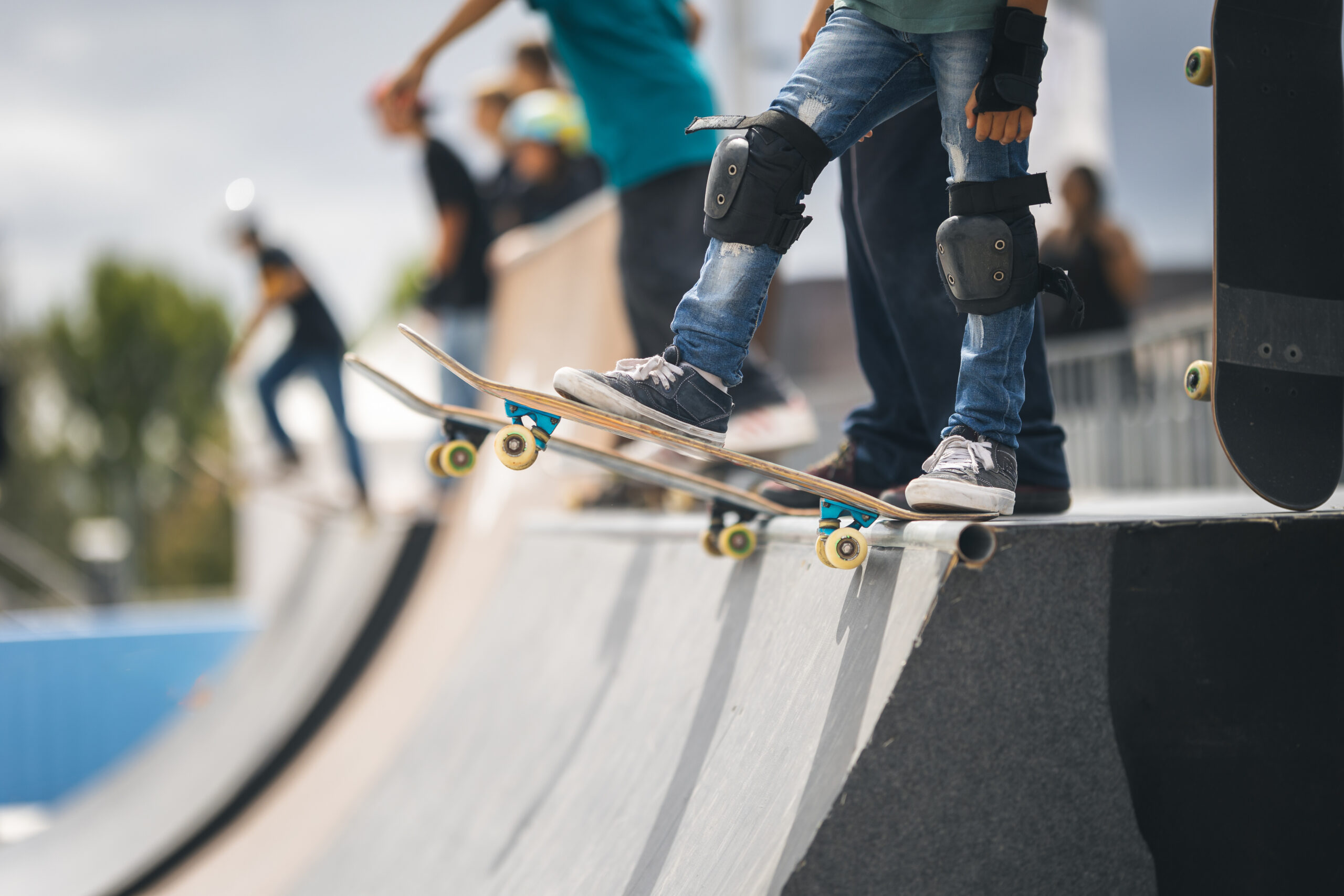
- Wear knee pads, elbow pads, and wrist guards for skateboarding, inline skating, and scootering.
- Ride on smooth, paved surfaces away from traffic whenever possible.
- Never skate or scoot at night without lights and reflective clothing.
- Never carry passengers on a scooter or skateboard.
- Follow local laws and regulations for where boards and scooters may be ridden.
- Check equipment before each use for cracks, loose hardware, or worn wheels.
- Children should not use adult-sized skateboards or scooters.
Watch for Recalled Helmets
CPSC regularly recalls skateboard and bicycle helmets that fail impact testing requirements. A recalled helmet provides no meaningful protection in a fall. Check SaferProducts.gov to verify that your helmet has not been recalled.
To report a dangerous skateboard, scooter, or helmet, visit SaferProducts.gov or call CPSC’s Hotline at 800-638-2772.