
The U.S. Consumer Product Safety Commission (CPSC) has heard heartbreaking stories from parents whose children ingested water beads and suffered severe consequences, including grave internal injuries, lifelong health impacts, and death. From 2016–2022, there were an estimated 7,800 emergency room visits associated with water beads, and CPSC is aware of at least one death.
What Are Water Beads?
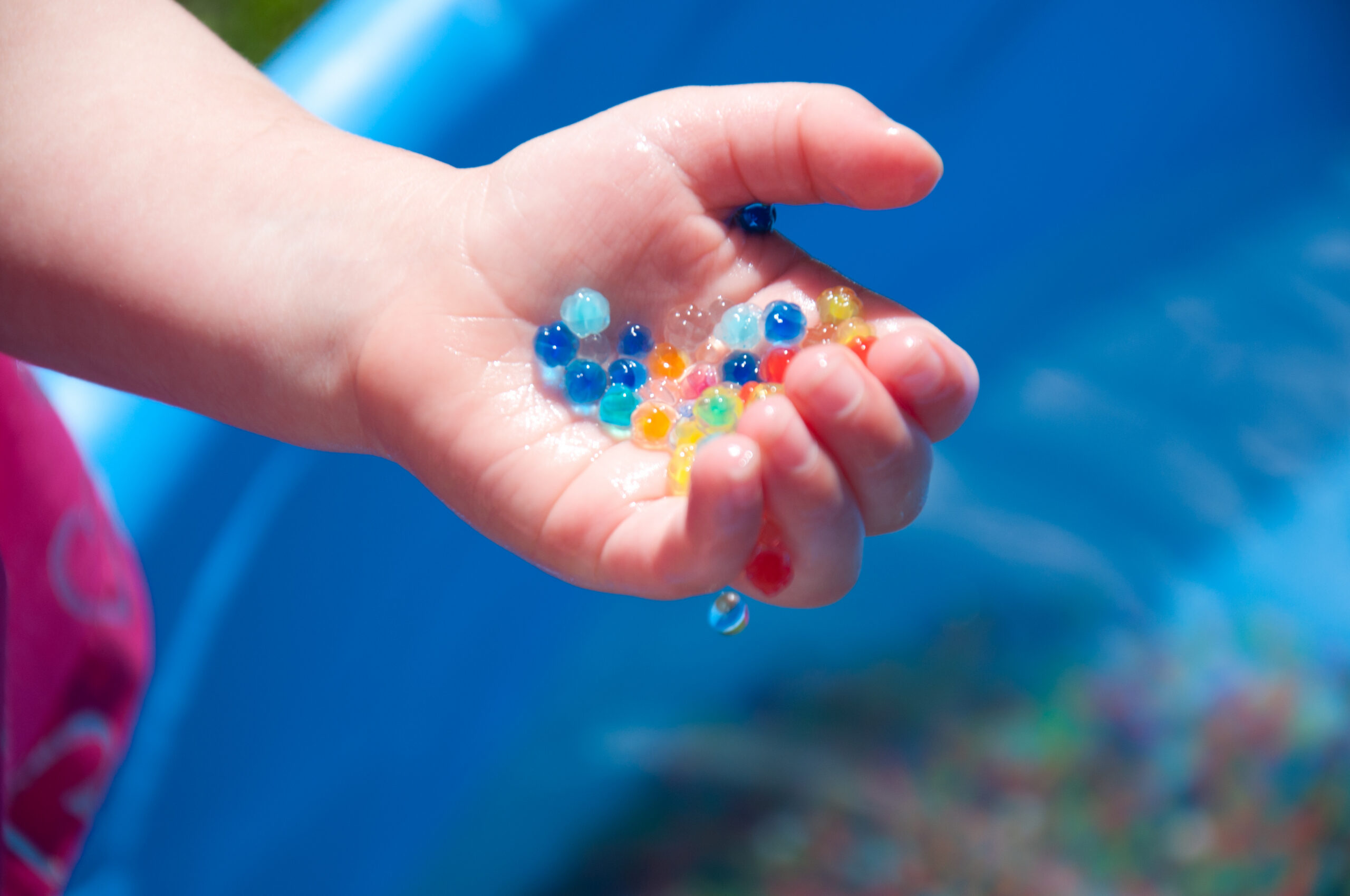
Water beads look harmless — almost like candy — but can be deadly to babies and small children if ingested, and can lead to internal injuries and even death if left undetected. Often sold as toys, in craft kits, as sensory tools for children with developmental disabilities, or for agricultural use, water beads are small, water-absorbing, often colorful balls of super absorbent polymer that can grow 100 times their original size when exposed to water.
Dry water beads can be the size of a pinhead, making them nearly undetectable if dropped on the floor or spilled in a playroom. When ingested, water beads can continue to grow inside the body, causing severe discomfort, vomiting, dehydration, intestinal blockages, and life-threatening injuries — and surgery may be required to remove them. Water beads inserted into ears can also damage ear structures, causing hearing loss and requiring surgery.
What Is the Warning?
CPSC urges parents and caregivers to remove these products from any environment with small children 3 years old and younger. CPSC also urges childcare centers, camps, and schools to avoid these products entirely. If you suspect your child has swallowed a water bead or inserted a water bead into their ear or nose, seek medical treatment right away.
Safety Tips
- The only way to mitigate the hazard associated with water beads is to remove them from any environment where small children (3 years old and younger) may live or visit.
- Do not allow children to play with water beads unsupervised.
- Water beads can easily scatter, roll, and become lost in the home and can be ingested in the dehydrated state.
- Store water beads in a secure container and location where young children cannot easily access them.
In Case of Emergency
- Call the National Poison Help Line at 800-222-1222, available 24 hours a day.
- Report any dangerous product or a product-related injury at SaferProducts.gov.